
Lambda the Ultimate

User loginNavigation |
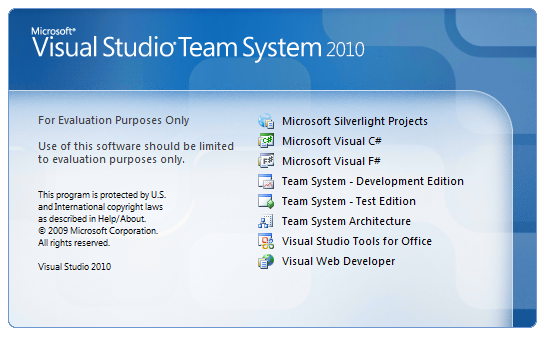
LtU ForumTim Sweeney on Epic Games' HistoryFrom the Past to the Future: Tim Sweeney Talks An interview with our own Tim Sweeney. There's admittedly not a lot of PLT here, but there's an interesting observation about the integration of an "editor" with a "game engine," beginning with ZZT and culminating in the Unreal technology, that might tease out some interesting discussion about how PLT can help build certain kinds of software (think live programming, JITs, type theory, reflection, "meta" vs. "object" languages, etc.) And perhaps Tim can respond to anything we come up with when he has the time. Deriving Functions to Work on Different Types of DataIn Mathematics one often writes Do you have ideas on how to use this notation in programming languages? Are there languages that allow you to do this in a general way? (i.e. without defining every operator Another example: I'd expect A+B where A and B are sets to produce 1) {lambda x -> a+x | a in A}, a set of functions Maybe it's possible to determine what to do from the context. Thank you for your ideas. Budapest FP MeetupIt is a bit late for today's meetup, but not too late: www.meetup.com/fp-bud/calendar/10412377/ The program is as follows: I. --------------------------------------- Abstract: We explore an extensibility mechanism for programming languages based on a subset of distfix(mixfix) operators. This mechanism gives tools to the programmer to increase conciseness by allowing him to build more complex operators via composition. We also show that some common features that are usually "built-in's" can be constructed as "libraries" using these operators. II. --------------------------------------- Abstract: Undo operation, mostly popularized by text editors, goes back to the ENIAC times. It has important uses in areas like debugging and error recovery. Since the pioneering Interlisp environment, different kinds of undos have been studied with different implementation methodologies. In this talk I will briefly summarize the previous work, and discuss various issues related to reverse excution of programs. III. --------------------------------------- Abstract: In this talk I will show how Haskell can be used as a platform for implementing Embedded Domain Specific Languages (EDSLs), utilising * Generalized Algebraic Data Types (GADTs) for representing typed expressions F# tip toes into the mainstream?There's something about seeing "Microsoft Visual F#" listed alongside C# on a Visual Studio Team System 2010 beta screenshot that makes it seem almost real. Maybe it's a fake screenshot. I wonder if there'll be a Visual F# 2010 Express Edition? Wouldn't that be something! Acknowledging the cosmic bonk/oif balanceAlert! The May 11, 2009 issue of The New Yorker ran a poem that name-checks our man Guy L. Steele along with Eric S. Raymond--apparently in their role as lexicographers of the hacker argot: Hackers Can Sidejack Cookies. Worth groking if you have the time. Extension Methods versus Structural Typing of Traits for solving the expression problemHere is a neat little thing that is tying my brain up into knots: Given a Java-like language, what would you prefer Extension Methods (ala C#) or Traits + Structural Typing. My working (read as: probably incomplete) definition of a trait is an interface with concrete methods. Unless I am mistaken the expressiveness of the two techniques would overlap significantly: Example 1 (extension methods):
class A {
  int m = 42;
  int f() {
    return m;
  }
}

extension B of A {
  int g() {
    return f() * 2;
  }
}

A x = new A();
print(x.g());
Example 2 (traits + structural-typing)
class A {
  int m = 42;
  int f() { return m; }
}

trait B {
  abstract int f();
  concrete int g() { return f() * 2; }
}

B x = new A(); // Notice: A never explicitly "implements" B
print(x.g());
I haven't looked at Scala in a while, so can you do this in it yet? I believe it is a direction they were going. For what its worth, the second approach appeals to me a bit more, because it is more discplined, and doesn't clobber the nice encapsulation advantages of classes. Now if I am not already way out in left-field, are these not both examples of solutions to the "expression problem" (http://www.daimi.au.dk/~madst/tool/papers/expression.txt)? Well I know that in example two I am cheating because there is a cast of "A" to "B". So I would call it a solution to the "weak expression problem". You can guess what I mean by that. A paper on psychology and programmingA couple of months ago the topic of psychology and computer programming came up in a thread; it was noted there didn't seem to be a lot of work done in the area (iirc). This paper actually has some hard data about novice developers who were given multiple different IQ/psych test then their success in implementing 'knowledge based' systems was measured. Interesting read: http://www.scribd.com/doc/15554396/Knowledge-Based-Systems-A-Study-of-new-Developers Obscure question about a remark in "A Tutorial on (Co)Algebras and (Co)Induction".This is kind of obscure. In the "A Tutorial on (Co)Algebras and (Co)Induction" we find the remark (page 28):
If A has more than two elements, then
Why is it "more than two" instead of "two or more"? Axum - A .NET language for safe, scalable and productive parallel programming through isolation, actors and message-passingMicrosoft just released a new concurrent programming language for the .NET platform called Axum:
Via Slashdot. WolframAlphaI'm not sure what WolframAlpha exactly does, but Stephen Wolfram's post about it definitely has my ears all perked up for its launch ... which should be any time soon.  |
Browse archives
Active forum topics |
Recent comments
9 weeks 12 hours ago
9 weeks 19 hours ago
9 weeks 1 day ago
9 weeks 1 day ago
9 weeks 5 days ago
9 weeks 5 days ago
9 weeks 6 days ago
9 weeks 6 days ago
9 weeks 6 days ago
9 weeks 6 days ago